
International Payments with India: Payments in Rupees and Features of Banking Control
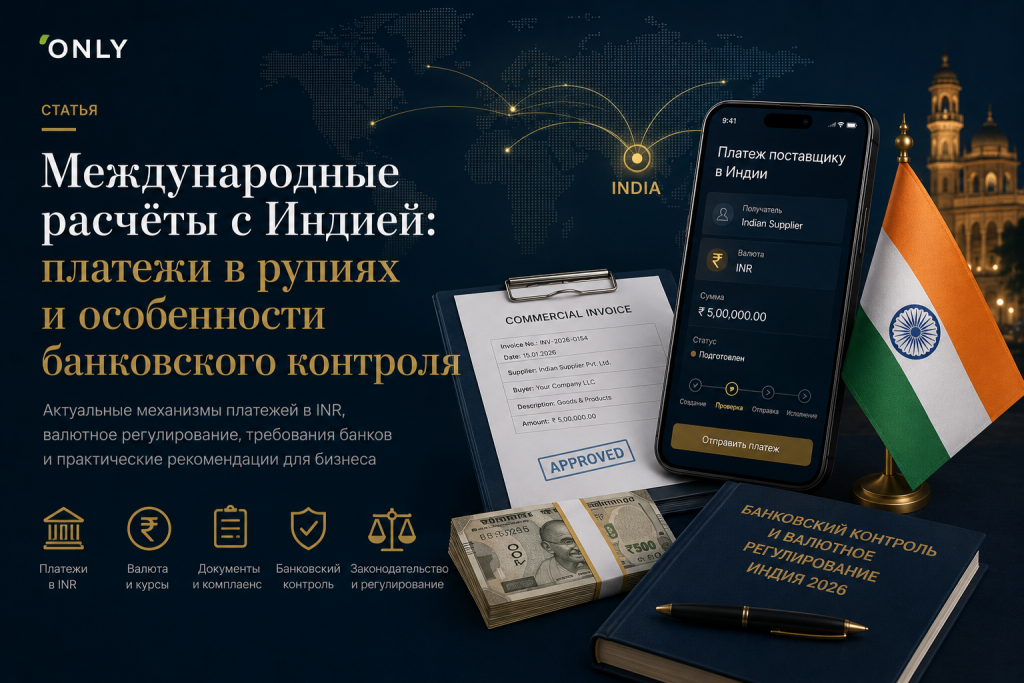
Foreign Economic Activity · Imports · India. International Settlements with India: Payments in Rupees and Banking Control Features. How businesses in Russia should pay Indian counterparties in 2026: why the rupee is a currency with difficulties, what alternatives exist, and what the bank will require. Settlements with India. Vostro accounts. Currency Control. India has become one of the directions that Russian businesses seriously consider as an alternative to traditional suppliers: pharmaceuticals, textiles, tea, mechanical engineering components, IT services. But settlements with Indian counterparties are structured differently than with China or Turkey—here, the limited convertibility of the rupee plays a key role. We break down how to build a working payment scheme and what to pay attention to when preparing documents. 🇮🇳 Why Settlements with India Are a Separate Story. The Indian rupee (INR) is not a freely convertible currency in the classical sense: the Reserve Bank of India regulates capital movement, and repatriating accumulated rupees back into dollars or other currencies requires separate agreements. This creates a specificity that is absent in settlements with Turkey or the UAE—where the currency is generally freely convertible within standard banking procedures. Important: before agreeing on rupee payment, it is advisable to find out in advance from the Indian counterparty how it plans to use the received funds—repatriation of foreign exchange revenue on its side is also regulated by Indian legislation and may take longer than the Russian company expects. 💱 In Which Currency Settlements Are Usually Conducted 🇮🇳 INR via Vostro Accounts. Rupee settlements go through special accounts in Indian banks (vostro/nostro), which requires separate route agreement. 💵 USD / AED. Through a bank intermediary in a third country—reduces dependency on rupee convertibility limitations. 🇨🇳 CNY. Relevant if the Indian supplier has settlements with Chinese partners and a yuan account. The currency choice for settlements with India directly affects the speed and predictability of the payment. A universal scheme that suits any company equally well does not exist here—even more so than in other directions—the route is selected based on the specific counterparty, recipient bank, and nature of the transaction. 🏦 How Banking Routes Are Structured In practice, there are several models for organizing settlements with India: Direct settlements through vostro accounts—used when the Indian bank has correspondent relationships supporting such a scheme; suitable for regular large volumes. Settlements through a third-country bank—the payment passes through an intermediary that has working relationships with both the Russian and Indian banks. Agency model—used if the direct route for a specific bank pair does not work and the transaction volume does not allow for long negotiations. When choosing a route, it is important to consider not only the currency and amount but also how the counterparty plans to use the received funds—this determines which settlement model will be sustainable over time, not just for a one-time transaction. 📄 Which Documents the Bank Will Require. Document. Why it is needed. Contract / Invoice. Specifies the transaction subject, amount, and payment terms. Counterparty Data. Indian company details, including vostro account details for rupee settlements. Description of Goods or Services. Particularly important for pharmaceuticals and high-tech products—often requires detailed description. Payment Basis. Reference to the specific contract clause for the payment. Economic Purpose of the Operation. Business purpose explanation—the banks carefully verify this direction due to its specificity. Logistics Documents. Proof of delivery authenticity upon physical movement of goods. Due to the specifics of Indian currency regulation, banks often request a more detailed explanation of the economic purpose of the operation than for settlements with other countries. Preparing such an explanation in advance is what reduces the risk of requests or payment delays. ⚠️ Common Challenges When Working with India. The counterparty cannot quickly repatriate the received rupees into a convertible currency—this should be discussed before the transaction, not after; The correspondent bank does not support the selected rupee settlement route for a specific amount; Insufficiently detailed description of goods or services, especially in pharmaceuticals and IT; Discrepancy between the stated transaction amount and the amount actually passing through the vostro account. If rupee settlement seems overly complicated—for one-time or medium-volume transactions, it is often more effective to use an intermediate currency (USD, AED) through a third-country bank than to build a vostro scheme from scratch. 🤝 How It Is Organized at ONLY. ONLY supports international settlements for legal entities and sole proprietaries, including the India direction—with consideration of rupee convertibility specifics and requirements of Indian and Russian banks to documents. We clearly state upfront if an operation cannot be conducted—for example, due to missing documents or unclear business purpose—reducing risks for both the client and the bank. Application and Initial Analysis. We analyze the task, settlement currency, and counterparty specifics. Settlement Model Selection. Taking into account the recipient bank and rupee convertibility limitations. Operation Support. Document preparation and coordination of parties. Completion and Reporting. Transaction closure and confirming documents. Need to pay a counterparty in India? An ONLY specialist will analyze the documents and select a working settlement model considering the currency specifics of the direction. Submit an application for settlement → ❓ Frequently Asked Questions. Can you pay Indian suppliers in rupees? Yes, but rupee settlements typically go through special vostro accounts in Indian banks. Such a scheme requires separate agreement and is not always suitable for fast or one-time transactions. In which currency is it easiest to settle with India? In practice, USD, AED, or CNY are more commonly used through a bank intermediary in a third country—this reduces dependency on rupee convertibility limitations. Why is it difficult to repatriate Indian rupees back into foreign currency? The rupee is convertibly limited: transferring accumulated rupees back into dollars or other currencies is regulated by the Reserve Bank of India and requires additional agreements. What documents are needed to pay an Indian counterparty? Minimum: contract or invoice, counterparty data, description of goods or services, and payment basis. For complex operations: additional economic justification and logistics documents.
How to Pay a Supplier in Vietnam: Currency, Banks, Documents in 2026
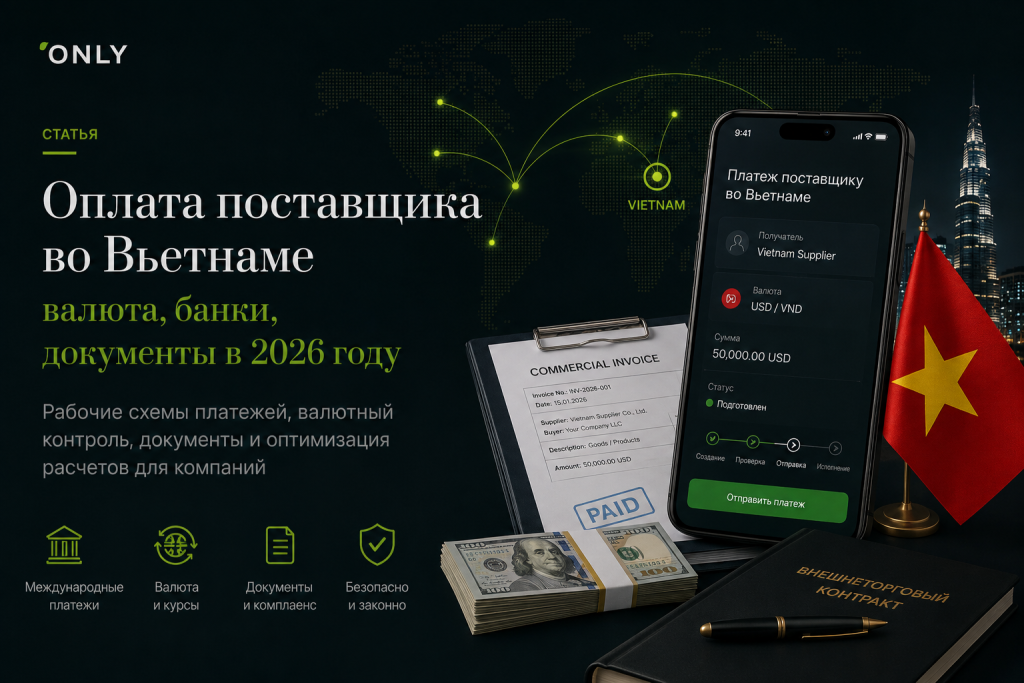
Foreign Economic Activity · Imports · Vietnam. Paying a Supplier in Vietnam: Currency, Banks, Documents in 2026. How to build a working payment route for transactions with Vietnamese suppliers, which currency to choose, and what documents the bank will require. Imports from Vietnam. Currency Control. Banking Support. Over the past two to three years, Vietnam has become one of the key import directions for Russian business—alongside China and Turkey. Through Vietnamese suppliers, they purchase textiles, electronics, components, furniture, and products for marketplaces. However, along with increasing volumes come questions: which currency to pay in, which banking route works in 2026, and what documents the bank will require before approving the payment. We will break it down step by step. 🇻🇳 Why Payments to Vietnam Are a Separate Task. Many companies mistakenly apply to Vietnam the same settlement model they use for China. In practice, banking infrastructure, counterparty currency preferences, and document requirements differ. Vietnamese banks are less willing to work directly with Russian correspondent accounts, so the settlement model almost always requires individual selection—taking into account the recipient bank, amount, and nature of the transaction. Important: at ONLY, each task for Vietnam is analyzed separately—they check which bank the supplier uses, whether it has a USD or CNY currency account, and what goods and in what volume are being purchased. This determines which settlement model will work. 💱 In Which Currency to Settle In practice, there are three main scenarios: 💵 USD. The main currency for large and medium-sized contracts. Universal, but requires correspondent bank verification. 🇨🇳 CNY. When the supplier works through Chinese partners or has a yuan account. Often speeds up payment processing. 🇻🇳 VND. Local purchases, small factories. Requires separate justification and is supported by not all sender banks. Currency selection is not a formality but part of the settlement model: it determines which correspondent banks the payment will pass through and what document package is needed. This is one of the tasks ONLY resolves at the initial application analysis stage. 🏦 Which Banking Routes Work in 2026. Taking into account the restrictions on direct correspondent connections, payments to Vietnam most often proceed via one of the following methods: Through a third-country bank—when the Vietnamese supplier has an account in a bank that supports settlements with Russian counterparties. Through an agency or intermediary model—if the counterparty lacks suitable banking infrastructure and a direct payment is blocked. Through alternative payment channels, selected for the specific recipient bank and transaction amount. There is no universal route that works equally well for any company—the recipient bank, the sender’s compliance policy, and the nature of the goods change the picture. Therefore, at ONLY, the settlement model is selected individually: first, the task is analyzed, and then one or several route options are proposed. 📄 Documents Required by the Bank. Document. Why it is needed. Contract / Invoice. Specifies delivery and payment terms. Product Specification. Important when purchasing a wide range of goods (textiles, components). Counterparty Data. Bank details, registration documents of the Vietnamese company. Payment Basis. Reference to a specific contract clause for the payment. Economic Purpose of the Operation. Explanation of why the company needs the goods and how they will be used. Logistics Documents. Proof of delivery authenticity—transport documents, carrier invoices. If documents are insufficient or contradictory—for example, if the invoice amount does not match the payment amount—the bank typically suspends the operation and requests explanations. ONLY handles the analysis and preparation of such a package even before the payment is sent to reduce the risk of requests or returns. ⚠️ Typical Reasons for Payment Refusal or Delay. Mismatch between payment amount and contract or invoice terms; Lack of explanation for the economic purpose of the operation, especially for the first transaction with a new counterparty; Discrepancies in recipient data between the invoice and payment order; The correspondent bank does not support the selected route for a specific country pair. If the payment is already stuck or returned—do not resubmit the same operation unchanged: the bank is highly likely to repeat the refusal. The correct sequence of actions is to identify the reason, correct the documents or route, and only then resubmit the payment. 🤝 How It Is Organized at ONLY. ONLY supports international settlements for legal entities and sole proprietaries, including payments to Vietnamese suppliers. We clearly communicate upfront if an operation cannot be conducted—for example, due to missing documents or unclear business purpose—reducing risks for both the client and the bank. Application and Initial Analysis. We analyze the task, country, currency, and counterparty. Settlement Model Selection. Taking into account the recipient bank and nature of the operation. Operation Support. Document preparation and coordination of parties. Completion and Reporting. Transaction closure and confirming documents. Need to pay a supplier in Vietnam? An ONLY specialist will review the documents and propose a working settlement model tailored to your task. Submit an application for settlement → ❓ Frequently Asked Questions. In which currency to pay a supplier in Vietnam? Settlements most often proceed in USD or CNY; less frequently, in Vietnamese Dong. The choice depends on the recipient bank and whether the counterparty has a currency account. Can a payment be made directly via SWIFT? Technically yes, but some routes are complicated. In practice, payments more often go through third-country banks or alternative settlement models. What documents are needed for payment? Minimum: contract, invoice, specification, counterparty data, and payment basis. For complex transactions: additional logistics documents. Why might a bank return a payment? Most commonly due to insufficient documents, amount discrepancies, or lack of explanation for the economic purpose of the operation.
Typical Company Errors in International Payments
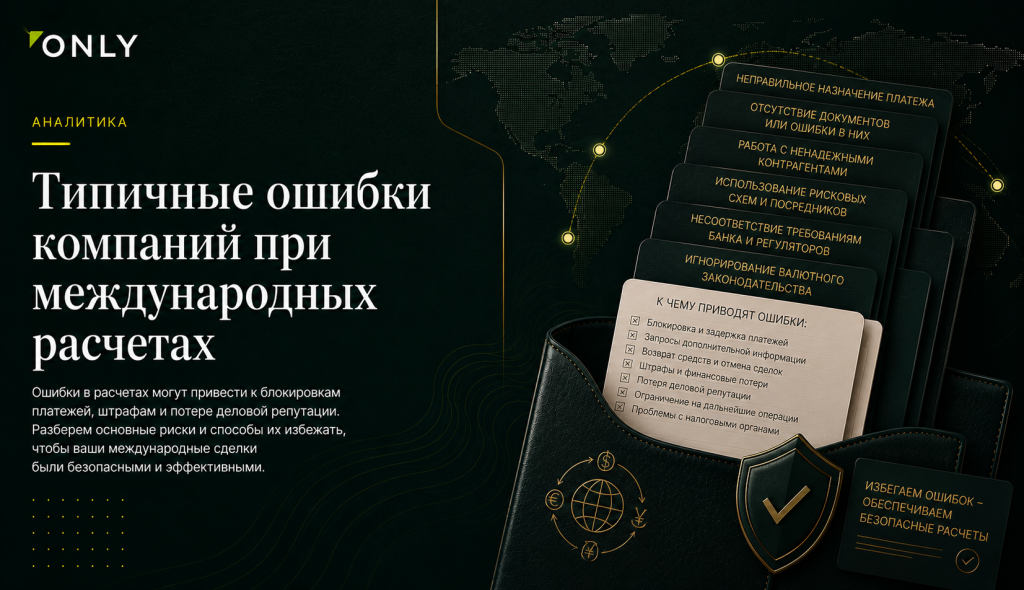
How to Properly Prepare Payment Purpose for a Foreign Supplier. International settlements require not only knowledge of banking procedures but also correct organization of the entire foreign trade transaction. In practice, most problems arise not from the fund transfer itself but from document errors, insufficient counterparty verification, or non-compliance with bank requirements. Even a minor inaccuracy may lead to additional requests, payment delay, or operation refusal. For companies regularly working with foreign suppliers and buyers, it is important to understand the most common errors and take preventive measures in advance. Proper document preparation and compliance with bank compliance requirements allow significantly reducing risks and ensuring stable international payment processing. Why Problems Arise During International Settlements. The bank is obligated to check every international operation for compliance with currency legislation, internal control, and bank compliance procedures. During verification, the following are analyzed: transaction documents; foreign counterparty; payment purpose; operation economic purpose; operation correspondence to the company’s activities; source of funds. If the bank discovers discrepancies, it has the right to request additional documents or temporarily suspend the payment processing. Error No. 1. Lack of Foreign Counterparty Verification. One of the most common errors is starting cooperation without checking the supplier or buyer. Before signing the contract, it is recommended to verify: company registration; legal status; bank details; business reputation; official website; industry. Lack of such verification may lead to cooperation with an unreliable company or fraudsters. Error No. 2. Insufficiently Developed Foreign Trade Contract. The contract is the main document of the international transaction. Common errors: too general product description; absence of payment terms; absence of delivery terms; undefined performance timelines; absence of party responsibilities. The more detailed the contract is, the easier to pass bank verification and avoid disputes. Error No. 3. Document Mismatch. The bank always compares information in all documents. Most common discrepancies: different amounts; different company details; different product descriptions; currency mismatch; date errors; missing contract references. Even small inconsistencies may become the reason for additional verification. Error No. 4. Incorrect Payment Purpose. The payment purpose must contain sufficient information for understanding the operation’s essence. It is not recommended to use formulations such as «payment under contract», «for goods», «payment for services». It is better to indicate: contract number; contract date; invoice number; brief goods or services description. Detailed payment purpose significantly accelerates operation processing. Error No. 5. Lack of Economic Purpose Explanation. In many cases, the bank is interested in why the company purchases the goods or pays for the services. You should be ready to explain: how the goods are used in company activities; why this particular supplier is chosen; what commercial purpose the transaction has; how the product cost is determined. If the operation’s economic purpose is clear and confirmed by documents, the probability of additional questions is significantly reduced. Error No. 6. Payment Without a Full Document Package. Some companies send the payment immediately after receiving the invoice, not checking the other documents. Before payment, it is desirable to have: contract; invoice; specification; additional agreements (if any); confirmed bank details. A full document package allows avoiding most requests from the bank. Error No. 7. Untimely Response to Bank Request. If the bank sends a request for additional documents, it is important to prepare the response promptly. Delay may lead to: increased verification time; payment timeline slippage; transaction suspension; payment refusal. Therefore, it is recommended to determine an employee responsible for bank interaction in advance. Error No. 8. Use of Unverified Settlement Schemes. Attempts to use complex or opaque payment schemes may cause additional questions from the bank. For example: transferring funds to third parties; recipient mismatch with contract terms; unjustified intermediaries; changes to details just before payment. Before using a non-standard settlement scheme, it is recommended to assess possible risks and prepare confirming documents in advance. How to Avoid Errors During International Settlements. Companies successfully working in the international market usually follow several rules: verify each foreign counterparty; conclude detailed foreign trade contracts; check all documents before payment; correctly execute payment purpose; prepare documents for bank compliance in advance; respond to bank requests promptly; store a full document package for each transaction. Such an approach allows significantly reducing the probability of delays and refusals. Checklist Before International Payment ✓ Foreign counterparty has been verified. ✓ Foreign trade contract has been signed. ✓ Invoice and specification have been checked. ✓ Bank details have been confirmed. ✓ Payment purpose has been filled out in detail. ✓ Documents for the bank have been prepared. ✓ Transaction economic purpose is clear. ✓ A responsible employee is ready to interact with the bank. Conclusion. Most problems with international settlements are related not to the banking system but to errors in transaction preparation. Insufficient counterparty verification, inconsistent documents, incorrect payment purpose, or lack of operation economic purpose confirmation may lead to delays and additional verifications. A comprehensive approach to international transaction preparation, careful attention to documents, and compliance with bank compliance requirements allow significantly reducing risks, accelerating payment processing, and ensuring stable business operations with foreign partners.
How to Choose a Safe International Payment Scheme
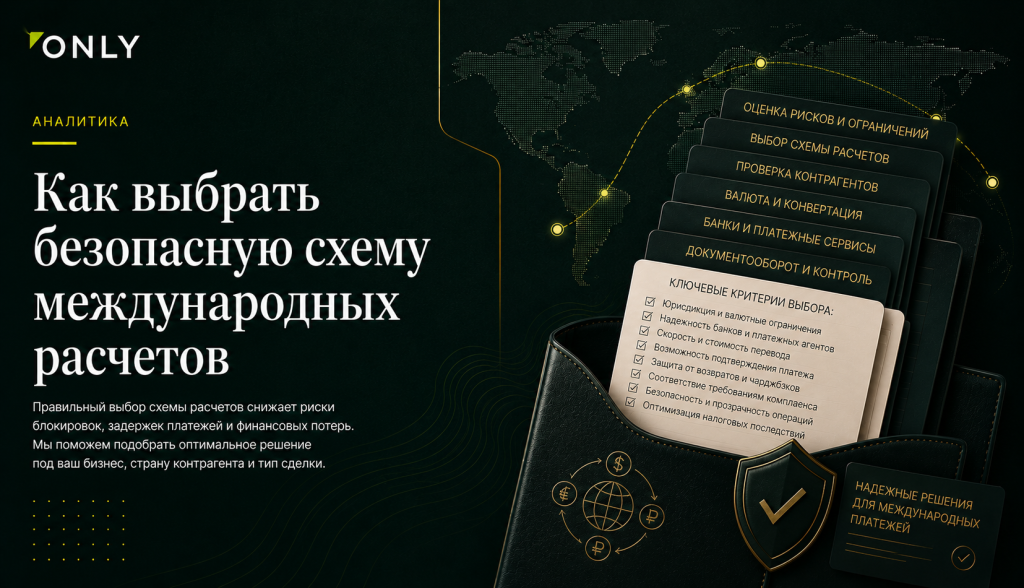
How to Choose a Safe International Settlement Scheme. The choice of an international settlement scheme directly affects the safety of the foreign trade transaction, the speed of payment processing, and the company’s financial risks. Incorrect payment method may lead to delivery delay, fund loss, additional questions from the bank, or even impossibility to complete the transaction. When working with foreign suppliers and buyers, it is important to consider not only the product or service cost but also the counterparty reliability, delivery terms, bank compliance requirements, legislative specifics, and the specific operation’s risk level. There is no universal international settlement scheme—the optimal option always depends on the transaction terms and the level of trust between the parties. Professional settlement scheme choice allows protecting the business interests, reducing financial loss probability, and ensuring stable international payment processing. Why It Is Important to Correctly Choose the Settlement Scheme. An international transaction includes several participants: buyer; seller; banks of the parties; logistics companies; customs authorities; insurance organizations (if needed). Each stage is associated with certain risks. Incorrect payment order may lead to: loss of advance payment; delivery delay; impossibility to receive goods; bank refusal of payment processing; additional expenses; legal disputes between the parties. Therefore, settlement terms should be agreed upon before signing the foreign trade contract. 1. Advance Payment. Advance payment is one of the most common international settlement methods. Advantages: quick transaction; simple settlement scheme; convenience for the supplier. Disadvantages: high risk for the buyer; possibility of supplier non-performance; difficulty of fund return. Full advance payment is most often used for long-term cooperation with verified suppliers. If the company works with a new partner, it is recommended to consider alternative options or limit the advance payment amount. 2. Partial Advance Payment. A compromise option is splitting the payment into several stages. For example: 30%—after signing the contract; 70%—after product readiness or before shipment. This approach allows for distributing risks between the parties and increasing trust within the transaction. 3. Payment After Delivery. In this case, the buyer pays for the goods after receiving the documents or the products themselves. Advantages: minimal risk for the buyer; possibility to check product quality. Disadvantages: the supplier takes on additional risks; this scheme is available primarily to regular customers. 4. Phased Settlements. For equipment delivery, large projects, or long-term production, a phased payment scheme is often applied. Payment may be made: after product manufacturing; after testing; after shipment; after equipment installation; after signing acts of performed work. This scheme ensures a balance of both parties’ interests. Which Factors to Consider When Choosing a Settlement Scheme. Before agreeing on payment terms, it is recommended to assess several factors. Counterparty Reliability. It is necessary to check: company registration; work experience; business reputation; bank details; cooperation history. The less information about the supplier, the more cautiously payment terms should be chosen. Transaction Amount. Risks significantly increase for large contracts. In such cases, it is recommended to: avoid full advance payment; execute documents in as much detail as possible; use additional methods of protecting the parties’ interests. Transaction Subject. Different goods require different approaches. For example: serial goods are easier to pay for using a standard scheme; equipment and custom production often require phased settlements; services may be paid for after completing separate work stages. Bank Requirements. Before conducting international payment, bank requirements need to be considered. The bank assesses: contract terms; advance amount; transaction documents; operation economic purpose; settlement transparency. If the payment scheme looks unusual or insufficiently justified, the bank may request additional documents. How to Reduce International Settlement Risks. Regardless of the chosen scheme, it is recommended to follow several rules. Before payment, it is necessary to: verify the foreign counterparty; conclude a detailed foreign trade contract; carefully check the invoice; ensure the accuracy of bank details; execute payment purpose in detail; save all business correspondence. Such measures significantly reduce the probability of disputes. Typical Errors in Choosing a Settlement Scheme. In practice, companies most often make the following errors: full advance payment to an unknown supplier; lack of counterparty verification; oral agreements instead of a contract; undefined payment terms; absence of transaction execution control stages; document errors; conducting payment without analyzing bank requirements. Most such problems can be prevented even at the transaction preparation stage. Checklist for Choosing a Safe International Settlement Scheme ✓ Foreign counterparty has been verified. ✓ Foreign trade contract has been signed. ✓ Payment terms have been determined. ✓ Transaction risks have been assessed. ✓ Bank details have been verified. ✓ Documents for the bank have been prepared. ✓ Payment purpose has been filled out correctly. ✓ A settlement scheme considering both parties’ interests has been chosen. Conclusion. Choosing a safe international settlement scheme is one of the key stages of any foreign trade transaction. It determines not only the payment speed but also the company’s financial safety level. Professional counterparty verification, correctly executed contract, and appropriate payment order choice allow significantly reducing risks, successfully passing bank compliance, and ensuring stable business operations with foreign partners.
Banking Compliance: How to Prepare for an Audit
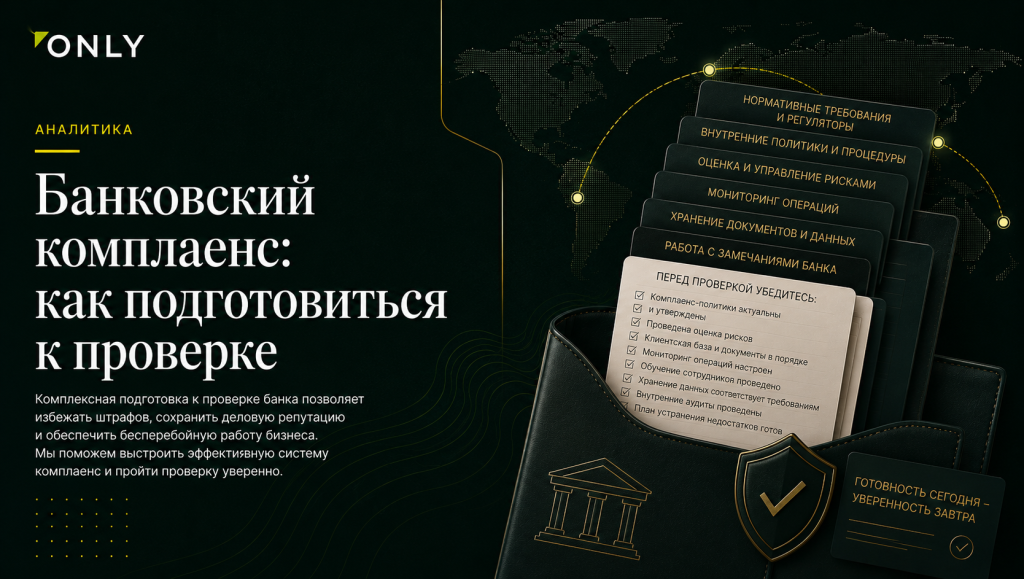
Bank Compliance: How to Prepare for Verification. Bank compliance is an obligatory part of international settlements. Before conducting payment, the bank assesses not only the correct completion of the payment order but also analyzes the transaction documents, operation participants, the economic purpose of the transfer, and compliance with currency legislation requirements. Such verification allows banks to reduce financial risks and comply with legislative requirements. For business, bank compliance means the necessity to prepare documents in advance and be ready to confirm the legality of each international operation. The more transparent the transaction and the higher the quality of the documents, the faster the bank makes the decision on payment processing. Companies that take bank control requirements into account in advance face additional requests, operation suspensions, or international settlement refusals much less frequently. What Is Bank Compliance. Bank compliance is a set of procedures, within which the bank checks the international transaction before conducting payment. During verification, the following are analyzed: transaction participants; foreign counterparty; operation documents; payment purpose; source of funds; economic justification of the transaction; operation correspondence to the company’s activities. The bank’s main task is to ensure the operation is legal, transparent, and corresponds to internal control requirements. When the Bank Conducts Verification. Compliance is conducted for practically every international transfer. Special attention is paid to operations: with new foreign suppliers; large amounts; advance payments; non-standard contracts; service payments; work with multiple intermediaries. Additional verification is also possible if the bank has previously sent the company requests for similar operations. 1. Prepare a Full Document Package. Before sending the payment, it is recommended to collect the transaction documents in advance. As a rule, the bank may request: foreign trade contract; invoice; specification; additional agreements; transport documents; commercial offer; correspondence with the counterparty; documents on transaction execution. All documents should be consistent and contain identical information. 2. Verify the Foreign Counterparty. Before starting cooperation, it is desirable to independently check the foreign company. Attention should be paid to: organization registration; business reputation; official website; bank details; activity correspondence to the transaction subject. If the supplier was recently registered or uses third-party accounts, the bank may request additional explanations. 3. Prepare the Economic Purpose Justification. One of the most common bank questions concerns the operation economic purpose. The company should be ready to explain: why the goods or services are purchased; how the purchase relates to the main activities; how the product will be used; why this particular supplier is chosen. Clear business purpose description significantly accelerates verification passage. 4. Check Document Execution Accuracy. Even small errors may lead to additional questions. Before sending documents, it is recommended to check: party details; amounts; currency; dates; document numbers; product or services description. It is especially important for the contract, invoice, and specification to fully correspond to each other. 5. Correctly Fill Out Payment Purpose. Payment purpose must contain as much useful information as possible. It is recommended to indicate: contract number; contract date; invoice number; goods or services description. For example: «Payment for the supply of industrial equipment under contract No. ___ dated ..__, invoice No. _ dated ..____». Too short formulations often become the reason for additional requests. 6. Prepare for Additional Bank Questions. Even with correctly executed documents, the bank may request additional information. For example: operation explanation; delivery documents; correspondence with the supplier; commercial offers; counterparty company information. It is desirable to determine an employee in advance who can interact with the bank promptly. 7. Store Documents for International Transactions. After completing the operation, it is recommended to store the entire document package. Usually, this includes: contract; invoice; specifications; payment documents; transport documents; correspondence; bank responses. This will help prepare for repeated verifications faster and confirm the operations’ legality. Typical Errors During Bank Compliance Passage. In practice, companies most often face the following problems: absence of part of the documents; contract errors; document information discrepancy; incorrect payment purpose; lack of operation economic purpose explanation; insufficient foreign supplier verification; untimely response to bank request. Most such situations can be prevented with professional preparation. Checklist for Preparing for Bank Compliance ✓ A full document package has been prepared. ✓ Foreign counterparty has been verified. ✓ Contract corresponds to the invoice. ✓ Amounts and currency have been checked. ✓ Payment purpose has been filled out correctly. ✓ Economic purpose explanation has been prepared. ✓ A responsible person for bank interaction has been assigned. ✓ All documents have been systematized and are accessible. Conclusion. Bank compliance is not an obstacle to international trade but an obligatory verification stage that helps ensure foreign economic operation transparency. Companies that prepare documents in advance and carefully execute transactions pass bank control significantly faster. Comprehensive preparation, timely information provision, and correct document execution allow reducing international payment delay risks and ensuring stable business operations with foreign partners.
Foreign Trade Outsourcing for Business
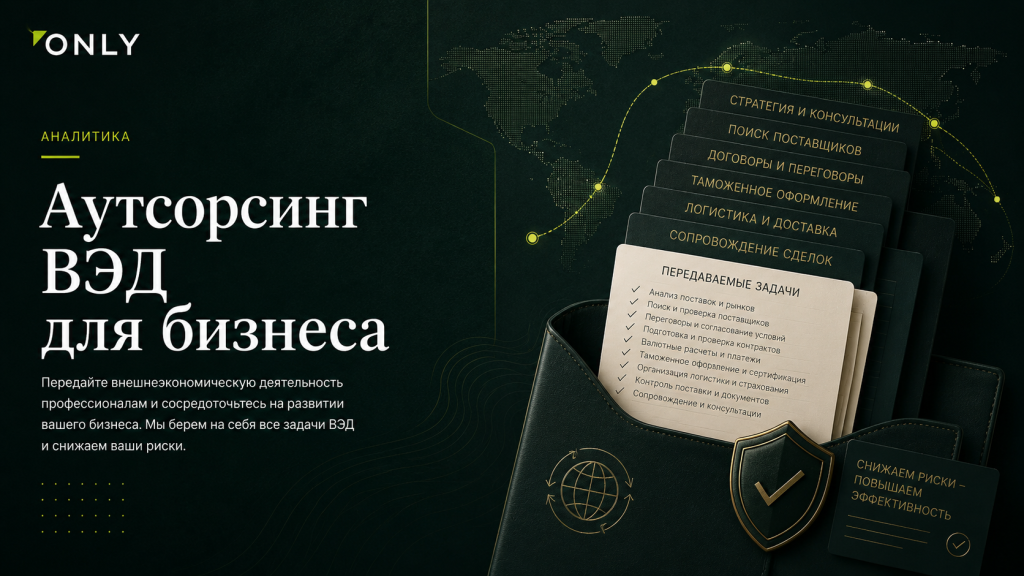
Foreign Economic Activity Outsourcing for Business. Conducting foreign economic activity requires a deep understanding of international settlements, currency legislation, bank compliance, logistics, and document management. For many companies, maintaining their own foreign economic department is economically unjustified, especially if international transactions are conducted irregularly or the company is just starting to work with foreign suppliers and buyers. In such cases, foreign economic activity outsourcing becomes the optimal solution. Transferring foreign economic support to specialized experts allows reducing costs, lowering error rates, and ensuring correct international transaction execution at every stage. Comprehensive foreign economic activity support helps the business focus on company development without being distracted by solving complex international trade issues. What Is Foreign Economic Activity Outsourcing. Foreign economic activity outsourcing is the transfer of part or all of the foreign economic activity processes to a specialized company or experts who support international transactions from start to finish. Depending on the business needs, you can transfer: search and verification of foreign counterparties; preparation of foreign trade contracts; organization of international settlements; interaction with banks; currency control support; document verification; organization of logistics; import and export transaction support. The company independently determines the scope of tasks to be performed by external specialists. Which Tasks Can Be Transferred to Outsourcing. In practice, foreign economic activity outsourcing covers almost all international trade stages. Specialists most often support: goods import; product export; payment to foreign suppliers; receipt of payments from foreign buyers; document execution; bank verification support; preparation of responses to bank requests; contract execution control. This approach allows avoiding the necessity to independently understand the complex requirements of international trade. 1. Verification of Foreign Counterparties. Before concluding the transaction, specialists conduct a verification of the foreign company. Usually, the following are analyzed: registration data; legal status; business reputation; bank details; work experience; public company information. Verification allows reducing the risk of cooperation with dishonest suppliers or buyers. 2. Preparation of Foreign Trade Documents. One of the most important tasks is document execution. Depending on the transaction, specialists help prepare: foreign trade contract; specification; invoice; additional agreements; commercial offers; documents for the bank. All documents are checked for consistency with each other, which significantly reduces the probability of requests from the bank. 3. Organization of International Settlements. International payment requires correct execution. Specialists help: verify bank details; select the optimal settlement scheme; execute payment purpose; prepare documents for currency control; reduce the risk of bank refusal. This is especially relevant when working with new countries or complex international transactions. 4. Support of Bank Compliance. Practically every international operation undergoes bank verification. Within the scope of support, specialists help: prepare explanations; collect additional documents; confirm transaction economic purpose; answer bank requests; eliminate identified discrepancies. This significantly shortens the verification time and increases the probability of successful payment processing. 5. Support of Import and Export Transactions. Foreign economic activity outsourcing may include full-cycle transaction support. Specialists control: contract preparation; document execution; international settlements; delivery organization; interaction with logistics companies; preparation of documents for customs clearance. A comprehensive approach allows avoiding errors at each foreign economic activity stage. Advantages of Foreign Economic Activity Outsourcing. Transferring foreign economic processes to specialists gives the business a number of advantages: reduction of costs for maintaining the internal foreign economic department; reduction of document execution errors; professional international settlements support; acceleration of bank compliance passage; reduction of payment processing refusal risks; prompt solution of arising questions; possibility to work with suppliers and buyers from different countries. In addition, the company gains access to the experience of specialists who regularly support international transactions. When to Use Foreign Economic Activity Outsourcing. This format is especially useful if the company: is entering the international market for the first time; starts product import or export; regularly faces bank requests; does not have its own foreign economic department; works with several countries simultaneously; conducts complex international settlements. Even large organizations often transfer individual processes to external specialists to reduce the load on internal departments. Typical Errors in Independent Foreign Economic Activity. Companies that independently organize foreign economic activity often face the following problems: contract errors; incorrect invoice execution; document mismatch; payment purpose errors; lack of foreign counterparty verification; international payment delays; difficulties in passing bank control. Most such errors can be avoided with professional transaction support. Checklist Before Transferring Foreign Economic Activity to Outsourcing ✓ The list of required services has been determined. ✓ Information about international transactions has been prepared. ✓ Existing contracts and documents have been collected. ✓ Countries and foreign partners have been determined. ✓ Bank details have been prepared. ✓ Responsible employees have been determined. ✓ The interaction order with specialists has been agreed. ✓ Transaction execution control has been set up. Conclusion. Foreign economic activity outsourcing for business allows companies to safely organize international activities without the need to create their own specialized department. Transferring foreign economic transaction support to professionals helps reduce risks, accelerate international settlement processing, and ensure correct execution of all documents. Comprehensive support is especially relevant for companies working with imports and exports, as it allows focusing on business development, delegating the solution of complex questions to specialists in foreign economic activity.
Support for Import Transactions: Stages and Documents
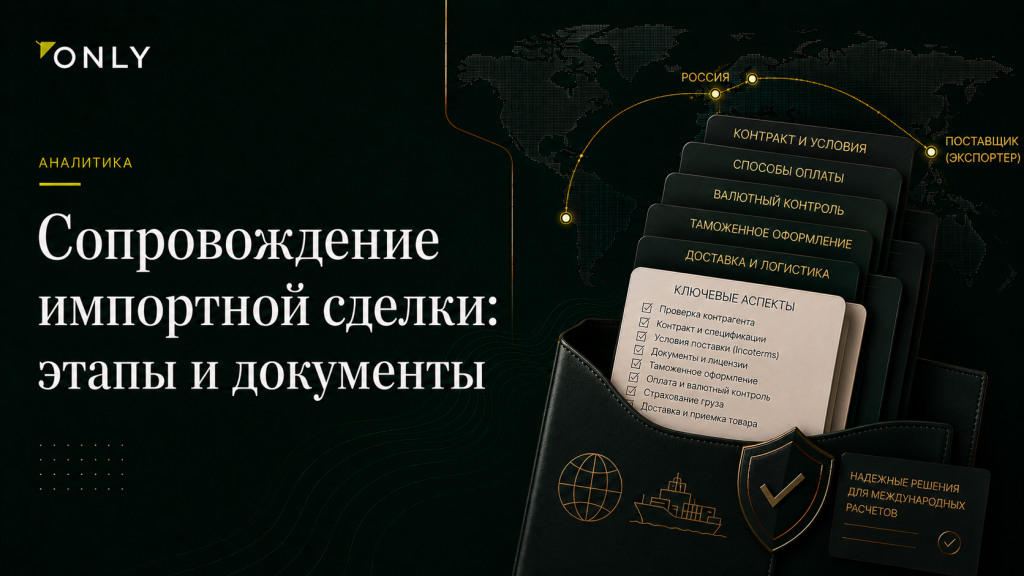
Сопровождение импортной сделки: этапы и документы При проведении международного платежа многие компании уделяют основное внимание контракту, инвойсу и банковским реквизитам, считая назначение платежа формальностью. На практике именно это поле является одним из первых, которое анализируют сотрудники банка и автоматизированные системы комплаенс-проверки. По назначению платежа банк получает первоначальное представление о сути операции, после чего сопоставляет указанную информацию с внешнеторговым контрактом, инвойсом, спецификацией и другими документами. Некорректное или слишком общее назначение платежа может привести к дополнительным запросам банка, увеличению срока проверки, а в некоторых случаях — к отказу в проведении международного перевода до устранения замечаний. Поэтому оформление назначения платежа требует такого же внимательного подхода, как и подготовка остальных документов по внешнеэкономической сделке. Почему назначение платежа имеет большое значение Российские банки обязаны проверять международные переводы в рамках валютного законодательства, требований по противодействию легализации доходов и внутренних процедур комплаенса. Назначение платежа помогает банку быстро определить: на основании какого документа производится оплата; соответствует ли платеж условиям договора; какой товар или услуга оплачиваются; имеет ли операция понятный экономический смысл; требуется ли дополнительная проверка сделки. Если информации недостаточно, банк, как правило, направляет клиенту запрос на предоставление пояснений или дополнительных документов. Какие сведения необходимо указать При оформлении назначения платежа рекомендуется включить всю информацию, которая позволяет однозначно идентифицировать операцию. Обычно указываются: номер и дата внешнеторгового контракта; номер и дата инвойса; номер спецификации (при наличии); краткое описание товара или услуги; номер УНК, если он используется при сопровождении сделки. Все сведения должны соответствовать документам, которые направляются в банк. Как описывать товар или услугу Описание предмета сделки должно быть кратким, но информативным. Банку важно понимать, за что именно производится оплата. Вместо общих формулировок рекомендуется использовать конкретные наименования. Например: поставка промышленного оборудования; запасные части для производственной линии; программное обеспечение по лицензионному договору; консультационные услуги; инженерное сопровождение проекта; электронные компоненты; химическое сырье; лабораторное оборудование. Чем понятнее описание, тем меньше вероятность возникновения дополнительных вопросов. Соответствие назначения платежа документам Назначение платежа должно полностью совпадать с информацией, содержащейся в контракте и инвойсе. Перед отправкой платежного поручения рекомендуется проверить: совпадает ли номер договора; правильно ли указана дата контракта; соответствует ли номер инвойса; совпадает ли описание товара; соответствует ли валюта условиям договора. Даже небольшие расхождения могут стать основанием для дополнительной проверки. Распространенные ошибки компаний Во время проверки международных платежей банки регулярно сталкиваются с типовыми ошибками. Наиболее распространенными являются: отсутствие ссылки на контракт; отсутствие номера инвойса; слишком общее описание операции; ошибки в номерах документов; использование внутренних сокращений компании; указание информации, отсутствующей в договоре; несоответствие назначения платежа инвойсу. Исправление подобных ошибок зачастую требует повторной подачи документов и увеличивает сроки проведения платежа. Что не рекомендуется указывать Назначение платежа не должно содержать лишнюю или неоднозначную информацию. Лучше избегать: внутренних кодов компании; непонятных сокращений; нескольких разных оснований платежа одновременно; формулировок, которых нет в контракте; сведений, противоречащих другим документам. Чем проще и понятнее текст назначения платежа, тем легче банку идентифицировать операцию. Какие документы может запросить банк Если назначение платежа вызывает вопросы, банк может дополнительно запросить: внешнеторговый контракт; инвойс; спецификацию; дополнительные соглашения; транспортные документы; коммерческое предложение; переписку с иностранным поставщиком; пояснение экономического смысла сделки. Подготовленный заранее комплект документов позволяет значительно сократить время проверки. Что проверить перед отправкой международного платежа Перед отправкой платежного поручения рекомендуется убедиться, что: номер и дата контракта указаны правильно; сведения об инвойсе совпадают с документами; описание товара соответствует договору; реквизиты получателя проверены; сумма и валюта соответствуют инвойсу; назначение платежа не содержит ошибок и лишней информации; при необходимости указан УНК. Заключение Правильное оформление назначения платежа иностранному поставщику — важная часть подготовки международного перевода. Именно это поле помогает банку быстро сопоставить платеж с документами и оценить экономический смысл сделки. Чем подробнее и точнее заполнено назначение платежа, тем ниже вероятность получения дополнительных запросов и задержек при проведении операции. Перед отправкой платежа рекомендуется еще раз проверить соответствие назначения платежа контракту, инвойсу и другим документам. Такой подход значительно упрощает прохождение банковского комплаенса, снижает риск отказа и позволяет провести международный платеж в максимально короткие сроки.
International Payments for Importing Raw Materials
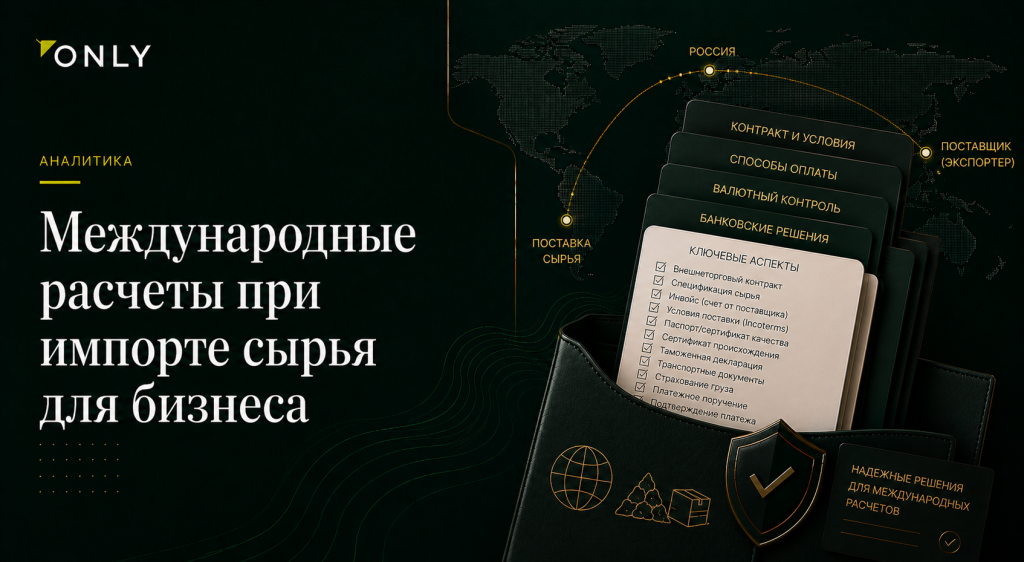
Международные расчеты при импорте сырья Импорт сырья является важной частью деятельности многих российских компаний, работающих в промышленности, производстве, строительстве, энергетике и других сферах. Закупка сырьевых материалов у иностранных поставщиков позволяет бизнесу обеспечивать стабильность производства, получать необходимые компоненты и расширять цепочки поставок. Однако международные расчеты при импорте сырья требуют тщательной подготовки. В отличие от обычных товарных операций, поставки сырья часто связаны с большими объемами, регулярными платежами, долгосрочными контрактами и сложной системой документооборота. Перед проведением платежа банк проверяет участников сделки, документы, назначение платежа и экономический смысл операции. Поэтому важно заранее подготовить полный пакет документов и убедиться, что вся информация соответствует условиям внешнеторгового контракта. Особенности международных расчетов при импорте сырья Импорт сырья может включать закупку: металлов и сплавов; химического сырья; строительных материалов; нефтехимической продукции; сельскохозяйственного сырья; промышленных компонентов; производственных материалов. Такие сделки часто имеют следующие особенности: крупные суммы контрактов; регулярные поставки; долгосрочное сотрудничество; необходимость подтверждения качества продукции; сложная логистика. Для банка важно понимать: кто является поставщиком; какое сырье приобретается; для каких целей оно используется; соответствует ли цена и объем операции деятельности компании. 1. Проверка иностранного поставщика сырья Перед началом сотрудничества необходимо проверить иностранную компанию. Следует получить: официальное название организации; регистрационные данные; юридический адрес; сведения о деятельности; банковские реквизиты; информацию о производственных возможностях. Важно убедиться, что поставщик действительно работает в соответствующей отрасли и имеет возможность выполнять обязательства. Особенно внимательно необходимо проверять новых поставщиков, которые: предлагают слишком выгодные условия; требуют полную предоплату; предоставляют минимальный пакет документов; используют счета третьих лиц. 2. Подготовка внешнеторгового контракта Основой международного расчета является контракт с иностранным поставщиком. В договоре необходимо указать: данные сторон; предмет поставки; характеристики сырья; объемы поставок; стоимость; валюту расчетов; порядок оплаты; сроки поставки; условия поставки. Для сырьевых товаров важно подробно описывать: наименование продукции; марку или сорт; технические параметры; единицы измерения; требования к качеству. Например, формулировка «поставка сырья» является слишком общей. Лучше указать конкретный вид продукции и ее характеристики. 3. Документы для оплаты иностранного поставщика сырья Для проведения международного платежа обычно требуются: внешнеторговый контракт; инвойс; спецификация; платежное поручение; документы по поставке. В зависимости от вида сырья банк может дополнительно запросить: сертификаты качества; документы происхождения товара; техническую документацию; транспортные документы; коммерческое предложение. Все документы должны содержать одинаковую информацию о товаре, стоимости и участниках сделки. 4. Проверка инвойса на сырье Перед оплатой необходимо внимательно проверить выставленный счет. Следует убедиться, что в инвойсе указаны: правильное название поставщика; номер и дата документа; ссылка на контракт; описание сырья; количество; цена; общая сумма; валюта платежа; банковские реквизиты. Особое внимание необходимо уделять количеству и единицам измерения. Ошибки в объемах поставки могут привести к дополнительным вопросам банка. 5. Особенности авансовых платежей при импорте сырья При закупке сырья часто используется предварительная оплата. В случае аванса банк может обратить внимание на: размер платежа; сроки поставки; условия исполнения обязательств; надежность поставщика. Чтобы снизить риски, рекомендуется иметь: подробный контракт; график поставок; спецификацию продукции; документы о предыдущем сотрудничестве. Если поставки осуществляются регулярно, желательно сохранять историю предыдущих операций. 6. Назначение платежа при импорте сырья Назначение платежа должно содержать четкое описание основания перевода. Рекомендуется указать: номер договора; дату контракта; номер инвойса; вид сырья. Например: «Оплата за поставку промышленного сырья по контракту №___ от ..__, инвойс №_ от ..____». Не рекомендуется использовать формулировки: «оплата товара»; «по договору»; «за материалы». Чем подробнее указано назначение платежа, тем быстрее банк сможет провести проверку. 7. Логистика и документы после оплаты После проведения платежа необходимо контролировать дальнейшее исполнение сделки. В зависимости от условий поставки могут потребоваться: транспортные документы; упаковочный лист; сертификаты качества; таможенные документы; документы происхождения товара. Информация в документах должна соответствовать данным контракта и инвойса. Типичные ошибки при расчетах за импорт сырья На практике компании сталкиваются со следующими проблемами: отсутствие проверки поставщика; недостаточно подробный контракт; неправильное описание сырья; несоответствие инвойса договору; ошибки в банковских реквизитах; отсутствие подтверждающих документов; слишком общее назначение платежа. Такие ошибки могут привести к задержке международного платежа и дополнительным запросам банка. Чек-лист перед оплатой импортного сырья ✓ Проверен иностранный поставщик.✓ Заключен внешний торговый контракт.✓ Описание сырья соответствует документам.✓ Инвойс проверен перед оплатой.✓ Банковские реквизиты подтверждены.✓ Сумма и валюта соответствуют договору.✓ Подготовлены документы для банка.✓ Понятна цель использования сырья в бизнесе. Заключение Международные расчеты при импорте сырья требуют системного подхода и тщательной подготовки документов. Из-за больших объемов поставок и высокой стоимости сделок особенно важно заранее учитывать требования банковского контроля. Проверенный поставщик, подробный контракт, корректный инвойс и прозрачная структура операции позволяют российским компаниям безопасно оплачивать импорт сырья, снижать риски задержек и обеспечивать стабильность международных поставок.
International Payments for Importing Equipment
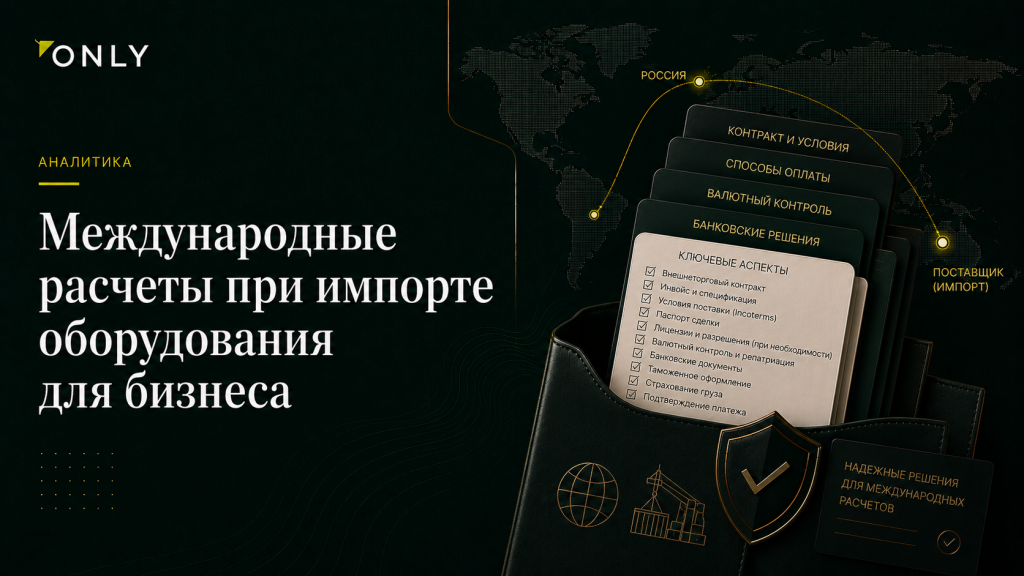
Международные расчеты при импорте оборудования Импорт оборудования требует особенно внимательного подхода к организации международных расчетов. В отличие от стандартной закупки товаров, поставка оборудования часто связана с крупными суммами, длительными сроками исполнения, техническими характеристиками и сложной логистикой. При оплате иностранному производителю или поставщику банк проверяет не только факт существования сделки, но и ее экономическую обоснованность. Необходимо подтвердить, какое оборудование приобретается, для каких целей оно используется, кто является поставщиком и каким образом будут исполнены обязательства по контракту. Правильная подготовка документов до отправки платежа позволяет снизить риск задержек, пройти банковский комплаенс быстрее и обеспечить безопасное проведение импортной операции. Особенности международных расчетов при импорте оборудования Импорт оборудования отличается от обычной закупки товаров рядом особенностей: высокая стоимость контрактов; длительные сроки производства и поставки; необходимость технического согласования; возможность поэтапной оплаты; наличие монтажных и пусконаладочных работ; необходимость сервисного обслуживания. Банку важно понимать полную структуру сделки: что именно покупает компания, у кого, по какой цене и как оборудование будет использоваться в деятельности организации. Особенно внимательно проверяются: крупные авансовые платежи; новые иностранные поставщики; нестандартные условия оплаты; сделки с посредниками. 1. Подготовка внешнеторгового контракта Первым этапом является оформление договора с иностранным поставщиком оборудования. В контракте необходимо указать: реквизиты сторон; описание оборудования; технические характеристики; стоимость; валюту расчетов; сроки изготовления и поставки; условия оплаты; порядок приемки оборудования. Для сложного оборудования рекомендуется включать: модель; серийные характеристики; комплектацию; техническую документацию; требования к монтажу. Чем подробнее описан предмет договора, тем меньше вопросов возникает при банковской проверке. 2. Проверка иностранного производителя или поставщика Перед оплатой необходимо убедиться в надежности контрагента. Следует проверить: регистрацию компании; историю деятельности; официальный сайт; наличие производства или офиса; отзывы и деловую репутацию; банковские реквизиты. Особенно важно проверить поставщиков, которые требуют значительный аванс. Перед перечислением средств рекомендуется убедиться, что: счет принадлежит именно поставщику; реквизиты совпадают во всех документах; компания действительно занимается производством оборудования. 3. Документы для оплаты оборудования Для проведения международного платежа обычно требуются: внешнеторговый контракт; инвойс; спецификация; техническое описание оборудования; платежное поручение. В зависимости от сделки банк может дополнительно запросить: коммерческое предложение; техническую документацию; график поставки; документы производителя; транспортные документы; пояснение экономической цели покупки. 4. Проверка инвойса на оборудование Инвойс должен полностью соответствовать условиям договора. Необходимо проверить: название оборудования; модель; количество; стоимость; валюту; реквизиты поставщика; условия оплаты. Описание оборудования должно быть достаточно подробным. Например, вместо: «промышленное оборудование» лучше указать: тип оборудования; производителя; модель; назначение; основные характеристики. Это помогает банку быстрее понять содержание операции. 5. Авансовая оплата при импорте оборудования Многие производители оборудования работают по системе авансовых платежей. При авансе банк может обратить внимание на: размер предварительной оплаты; сроки поставки; условия возврата денежных средств; репутацию поставщика. Чтобы снизить вопросы банка, рекомендуется иметь: подробный контракт; график производства; техническое задание; переписку с поставщиком. 6. Назначение платежа при оплате оборудования Назначение платежа должно содержать конкретную информацию. Рекомендуется указать: номер договора; дату контракта; номер инвойса; название оборудования. Например: «Авансовый платеж за промышленное оборудование по контракту №___ от ..__, инвойс №_ от ..____». Не рекомендуется использовать формулировки: «оплата оборудования»; «по контракту»; «за товар». Чем точнее назначение платежа, тем проще банку провести проверку. 7. Учет логистики и таможенного оформления При импорте оборудования важно учитывать весь цикл сделки: производство; отгрузку; транспортировку; таможенное оформление; ввод в эксплуатацию. После оплаты могут потребоваться: транспортные документы; упаковочный лист; сертификаты; документы происхождения; таможенная документация. Все сведения должны соответствовать данным в контракте и инвойсе. Типичные ошибки при расчетах за импорт оборудования На практике компании часто сталкиваются с проблемами: недостаточно подробный контракт; отсутствие технического описания; оплата новому поставщику без проверки; несоответствие инвойса договору; неверное назначение платежа; отсутствие документов для банка; оплата посреднику вместо производителя. Такие ошибки могут привести к задержке платежа или дополнительным запросам. Чек-лист международного платежа за оборудование ✓ Проверен иностранный поставщик.✓ Подготовлен подробный контракт.✓ Описание оборудования соответствует документам.✓ Инвойс проверен перед оплатой.✓ Банковские реквизиты подтверждены.✓ Подготовлены документы для валютного контроля.✓ Понятна цель приобретения оборудования.✓ Продуман порядок поставки и приемки. Заключение Международные расчеты при импорте оборудования требуют тщательной подготовки из-за высокой стоимости сделок и большого количества сопутствующих документов. Главные условия успешного платежа — надежный поставщик, правильно оформленный контракт, подробный инвойс и прозрачная структура сделки. Такой подход позволяет пройти банковский контроль без лишних задержек и безопасно организовать импорт оборудования для бизнеса.
International Payments with Serbia for Business
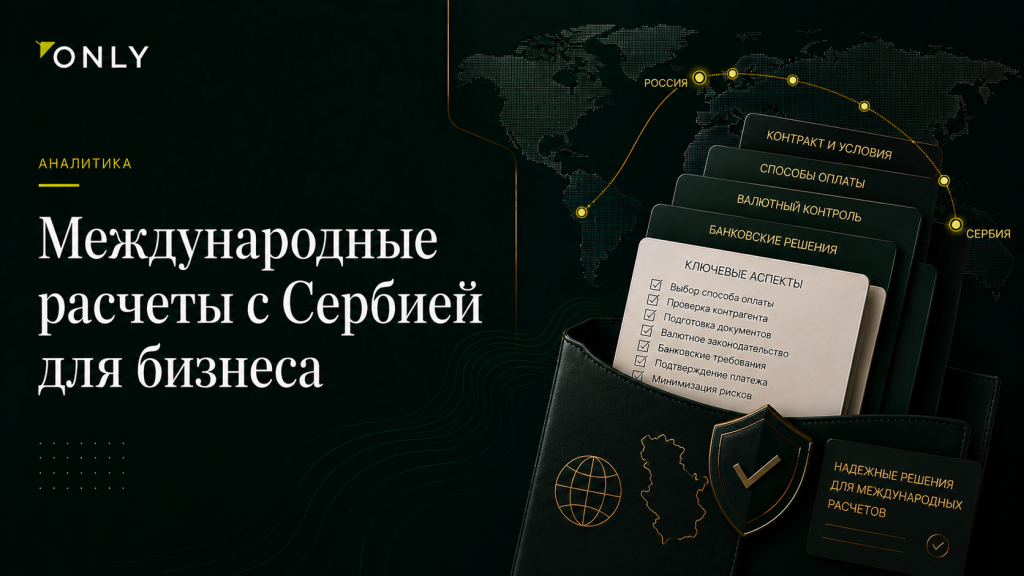
Международные расчеты с Сербией для бизнеса Международные расчеты с Сербией становятся востребованным направлением для российских компаний, которые развивают торговое сотрудничество с европейскими поставщиками. Сербия представляет интерес для бизнеса благодаря развитым производственным предприятиям, сельскому хозяйству, машиностроению, поставкам оборудования, комплектующих и различных услуг. При этом проведение платежей сербским компаниям требует внимательного подхода к подготовке внешнеэкономической сделки. Несмотря на наличие устойчивых деловых связей, любой международный перевод проходит проверку со стороны банка. Финансовая организация оценивает документы, участников сделки, назначение платежа и экономический смысл операции. Чтобы избежать задержек, дополнительных запросов и проблем при оплате, российской компании необходимо заранее проверить контрагента, подготовить договор и убедиться, что все документы соответствуют друг другу. Особенности международных расчетов с Сербией Российские компании могут использовать расчеты с Сербией для различных направлений: импорт оборудования; закупка комплектующих; приобретение промышленной продукции; поставка сырья; покупка сельскохозяйственных товаров; оплата инженерных и консультационных услуг. При проведении международной сделки важно учитывать, что банк проверяет не только сам факт перевода, но и основание операции. Основные вопросы банка: кто получает денежные средства; какие товары или услуги оплачиваются; есть ли действующий договор; соответствует ли операция деятельности компании; насколько прозрачна структура сделки. Подготовленные заранее документы позволяют значительно ускорить процесс проверки. 1. Проверка сербского контрагента перед оплатой Перед заключением договора необходимо убедиться в надежности иностранной компании. Следует проверить: официальное название организации; регистрационные данные; юридический адрес; сферу деятельности; историю работы компании; банковские реквизиты. Важно убедиться, что поставщик действительно существует и обладает возможностью выполнить обязательства по договору. Особое внимание следует уделять новым компаниям, посредникам и поставщикам, которые предлагают нестандартные условия оплаты. Перед перечислением денежных средств рекомендуется проверить: совпадает ли название компании в договоре и банковских реквизитах; принадлежит ли счет именно поставщику; нет ли требований оплатить третьему лицу. 2. Подготовка внешнеторгового контракта с сербской компанией Основой международного платежа является договор между российской и сербской компаниями. В контракте необходимо указать: полные реквизиты сторон; предмет сделки; стоимость товаров или услуг; валюту расчетов; порядок оплаты; сроки исполнения обязательств; условия поставки. Если речь идет о поставке продукции, необходимо подробно описать: наименование товара; количество; технические характеристики; стоимость единицы; общую стоимость партии. Чем подробнее составлен контракт, тем проще банку оценить законность операции. 3. Документы для оплаты сербского поставщика Для проведения международного платежа обычно используются: внешнеторговый контракт; инвойс; спецификация; платежное поручение; документы по поставке. В зависимости от характера сделки банк может запросить дополнительные документы: транспортные документы; сертификаты качества; документы происхождения товара; коммерческое предложение; пояснение экономического смысла операции. Все документы должны содержать одинаковые сведения о сторонах, сумме и предмете сделки. 4. Проверка банковских реквизитов сербской компании Перед отправкой платежа необходимо внимательно проверить реквизиты получателя. Следует убедиться в корректности: названия банка; номера счета; SWIFT-кода; имени получателя; адреса банка. Ошибки в реквизитах могут привести к возврату денежных средств или задержке зачисления. Особенно внимательно нужно относиться к изменениям банковских данных. Если поставщик перед оплатой направляет новые реквизиты, рекомендуется подтвердить их напрямую через надежный канал связи. 5. Назначение платежа при расчетах с Сербией Назначение платежа должно четко отражать основание перевода. Рекомендуется указать: номер контракта; дату договора; номер инвойса; краткое описание товара или услуги. Например: «Оплата за поставку промышленного оборудования по контракту №___ от ..__, инвойс №_ от ..____». Не рекомендуется использовать слишком общие формулировки: «оплата по договору»; «за услуги»; «перевод средств». Такие назначения могут привести к дополнительным вопросам со стороны банка. 6. Валютный контроль и банковский комплаенс При международных расчетах с Сербией банк проверяет: документы по сделке; иностранного контрагента; назначение платежа; сумму операции; соответствие деятельности компании. Дополнительные вопросы могут возникнуть при: крупных суммах; первом сотрудничестве с поставщиком; авансовой оплате; отсутствии подробного описания товара. Чтобы ускорить проведение платежа, рекомендуется заранее подготовить полный пакет документов. 7. Особенности импорта товаров из Сербии При приобретении товаров необходимо учитывать не только оплату поставщику, но и последующее оформление поставки. В зависимости от товара могут потребоваться: транспортные документы; документы для таможенного оформления; сертификаты соответствия; документы производителя; документы о происхождении продукции. Важно, чтобы описание товара совпадало во всех документах: контракте; инвойсе; транспортных документах; платежном поручении. Типичные ошибки при расчетах с Сербией На практике компании часто сталкиваются со следующими проблемами: отсутствие проверки иностранного поставщика; перевод денежных средств без договора; ошибки в банковских реквизитах; несоответствие инвойса контракту; слишком общее назначение платежа; отсутствие документов для банка; оплата посреднику вместо производителя. Большинство подобных рисков можно снизить еще до начала сотрудничества. Чек-лист перед оплатой компании из Сербии ✓ Проверены регистрационные данные поставщика.✓ Получены и подтверждены банковские реквизиты.✓ Подписан внешнеторговый контракт.✓ Инвойс соответствует договору.✓ Проверены сумма и валюта платежа.✓ Назначение платежа оформлено корректно.✓ Подготовлены документы для банковской проверки.✓ Экономический смысл сделки понятен. Заключение Международные расчеты с Сербией для бизнеса требуют комплексной подготовки: проверки контрагента, правильного оформления документов и соблюдения требований банковского контроля. Прозрачная структура сделки, надежный иностранный поставщик и полный пакет документов позволяют российским компаниям безопасно проводить платежи в Сербию, снижать риски задержек и эффективно развивать внешнеэкономическое сотрудничество.